
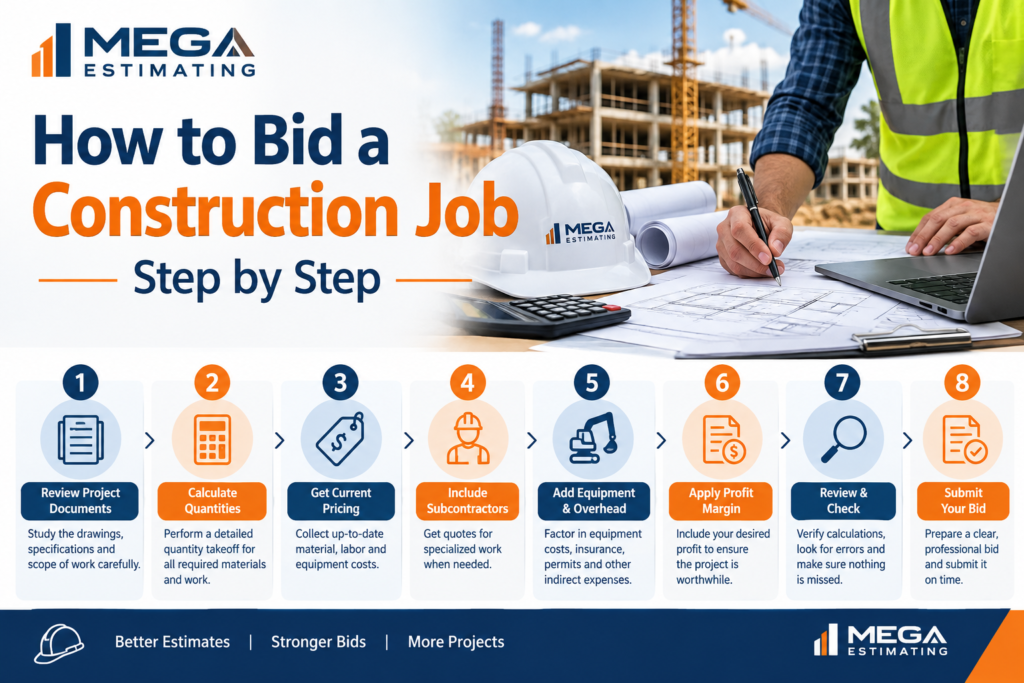
Bidding a construction job requires more than simply adding up material and labor costs. A successful construction bid must include accurate quantity takeoffs, realistic labor calculations, subcontractor pricing, equipment costs, overhead expenses, and profit margins.
A well-prepared bid helps contractors compete for projects while protecting profitability. Many contractors lose money because they underestimate labor hours, miss scope details, or fail to include hidden costs.
Whether you are bidding for residential construction, commercial buildings, renovations, or subcontracting work, an accurate estimating process is the foundation of a winning construction proposal.
Professional construction estimating services help contractors analyze project drawings, calculate costs, and prepare detailed bids before submitting proposals.
Construction Bid Components at a Glance
| Cost Component | Purpose |
|---|---|
| Material Costs | Calculates required building materials and pricing |
| Labor Costs | Determines workforce expenses |
| Equipment Costs | Covers machinery and tool expenses |
| Subcontractor Costs | Includes specialized trade pricing |
| Overhead Costs | Covers business operating expenses |
| Profit Margin | Ensures project profitability |
Each component must be calculated accurately because even a small mistake can reduce profit or cause contractors to lose competitive projects.
What Is a Construction Bid?
A construction bid is a formal proposal submitted by a contractor to complete a project for a specific price. The bid explains the expected costs, project scope, timeline, materials, labor requirements, and contract terms. To keep all of these items in a consistent, easy-to-review format, many contractors start from a construction bid template.
Before creating a bid, contractors usually begin with a detailed estimate. This process involves reviewing drawings, measuring quantities, and calculating project expenses.
Many contractors rely on professional building cost estimating services to develop accurate project budgets and avoid pricing mistakes.
How to Bid a Construction Job Step by Step
Review Project Plans and Specifications
The first step in preparing a construction bid is reviewing all project documents carefully.
Contractors should analyze:
-
Architectural drawings
-
Structural plans
-
Mechanical drawings
-
Electrical plans
-
Plumbing documents
-
Project specifications
-
Scope requirements
Plans provide important information about dimensions, materials, finishes, and installation requirements.
Missing details during the review stage can create expensive problems later, including change orders and unexpected costs.
Perform a Detailed Quantity Takeoff
A quantity takeoff converts construction drawings into measurable quantities of materials required for the project.
During the takeoff process, estimators calculate:
-
Concrete quantities
-
Lumber requirements
-
Steel materials
-
Drywall quantities
-
Flooring materials
-
Roofing measurements
-
Electrical components
-
Plumbing fixtures
Accurate quantities are essential because incorrect measurements can result in overbidding or losing money after winning the project.
Professional material takeoff services help contractors receive detailed quantity calculations from construction plans.
Calculate Material Costs
After completing the quantity takeoff, contractors need to determine current material pricing.
Material costs depend on:
-
Supplier prices
-
Project location
-
Material quality
-
Market conditions
-
Delivery expenses
Construction material prices constantly change, which is why using updated pricing information is important for accurate bids.
A professional estimate considers both material quantities and realistic market costs.
Estimate Labor Costs
Labor is one of the largest expenses in construction projects.
Labor calculations should include:
-
Number of workers
-
Hourly wage rates
-
Expected working hours
-
Installation complexity
-
Productivity rates
Many contractors underestimate labor because they focus only on material expenses.
Accurate labor forecasting helps protect profit margins and prevents budget problems during construction.
Include Equipment and Rental Costs
Construction projects often require specialized equipment.
Examples include:
-
Cranes
-
Excavators
-
Scaffolding
-
Lifts
-
Concrete equipment
-
Specialized tools
Equipment costs should always be included in the bid to avoid unexpected expenses.
Add Subcontractor Pricing
Many construction projects require multiple specialized trades.
Common subcontractors include:
-
Electrical contractors
-
Plumbing contractors
-
HVAC specialists
-
Roofing contractors
-
Concrete specialists
-
Flooring installers
Collecting accurate subcontractor quotes helps contractors create realistic bids.
For larger commercial projects, professional commercial estimating services can help analyze multiple trade requirements and prepare detailed cost breakdowns.
Calculate Overhead and Profit
A successful construction bid must include overhead and profit.
Overhead includes:
-
Insurance
-
Office expenses
-
Software costs
-
Management expenses
-
Administrative costs
Profit ensures the contractor earns revenue after completing the project.
A low bid may win a project but can create financial problems if profit margins are ignored.
Common Mistakes Contractors Make When Bidding Construction Jobs
Bidding Without Complete Plan Review
Submitting a bid without analyzing all drawings can result in missing important project requirements.
Using Old Material Prices
Outdated pricing creates unrealistic estimates.
Missing Scope Items
Commonly missed costs include:
-
Permits
-
Waste disposal
-
Delivery charges
-
Temporary facilities
-
Site preparation
Incorrect Labor Estimates
Underestimating labor hours is one of the biggest causes of construction losses.
Ignoring Contingency
Unexpected site conditions can increase project costs. A contingency allowance helps manage risks.
Construction Bid vs Construction Estimate
| Construction Estimate | Construction Bid |
|---|---|
| Calculates expected project costs | Formal proposal submitted to client |
| Used for pricing preparation | Used for winning projects |
| Focuses on calculations | Includes terms and conditions |
An accurate estimate becomes the foundation of a successful construction bid.
How Professional Estimating Services Help Contractors Win More Bids
Preparing competitive bids requires detailed analysis and construction knowledge.
Professional estimators help contractors with:
-
Blueprint analysis
-
Quantity calculations
-
Labor forecasting
-
Material pricing
-
Cost breakdowns
-
Bid preparation
Outsourcing estimating allows contractors to focus on managing projects while experienced estimators handle the pricing process.
Mega Estimating provides accurate construction estimating services for contractors who want reliable bids and better project planning.
How Mega Estimating Helps Contractors Prepare Winning Bids
Mega Estimating supports contractors across the USA with professional estimating solutions.
Our services include:
-
Residential project estimates
-
Commercial project estimates
-
Material quantity takeoffs
-
BIM-based estimating
-
Detailed cost reports
Contractors working on complex projects can also benefit from BIM estimating services to improve accuracy and reduce construction planning errors.
How to Prepare a Winning Construction Bid
Before submitting your next bid, make sure you:
✔ Review complete project documents
✔ Complete accurate quantity takeoffs
✔ Confirm current material pricing
✔ Calculate realistic labor costs
✔ Collect subcontractor quotes
✔ Include overhead and profit
✔ Review exclusions carefully
A detailed and professional bid improves your chances of winning projects while protecting profitability.
Frequently Asked Questions
How do you calculate a construction bid?
A construction bid is calculated by adding material costs, labor expenses, equipment costs, subcontractor pricing, overhead, and profit margins.
What should be included in a construction bid?
A construction bid should include project details, scope of work, material quantities, labor costs, equipment expenses, timeline, exclusions, and final pricing.
Why do contractors lose money on construction bids?
Contractors usually lose money because of inaccurate takeoffs, missing scope items, outdated pricing, and incorrect labor calculations.
Can estimating services help contractors win more bids?
Yes. Professional estimators provide accurate cost calculations and detailed reports that help contractors submit competitive proposals.
What is the difference between a takeoff and an estimate?
A takeoff calculates material quantities from drawings, while an estimate converts those quantities into project costs.
Get Accurate Estimates for Your Next Construction Bid
Winning construction projects starts with accurate estimating.
Mega Estimating helps contractors prepare detailed estimates, material takeoffs, and bid-ready reports for residential and commercial projects.
Upload your plans today and get professional estimating support for your next construction opportunity.